Two-echelon routing
City centres can’t take full-size trucks. Two-echelon routing, truck to hub and small vehicle to door, gets your goods there anyway.
- Free 30-minute call
- No commitment
- You own the code
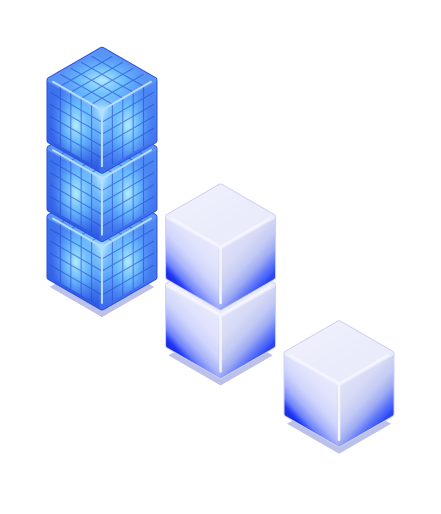
In short: A two-echelon vehicle routing plan splits deliveries into two stages: large trucks bring goods to small hubs near the city centre, and smaller vehicles carry them on to the door. Both legs and the handover at each hub are planned together.
The problem
At six in the morning, your truck stops at the edge of the old town. Past this point, a low-emission zone, a weight limit and narrow streets keep it out. The shops it serves are still inside, and they still expect their delivery by nine. So you need another way to cover the last few hundred metres.
Why the truck can’t finish the job
Low-emission zones, congestion charges, weight and size bans and narrow streets keep full-size trucks out of the dense core. So the last leg needs something smaller: a cargo bike, an electric micro-van or a hand trolley. Those vehicles get in where trucks can’t, but they have little range, little capacity and nowhere to reload. They need a small depot close by, a hub, where trucks drop off the goods.
Why planning the two legs separately fails
The usual shortcut plans the two legs one after the other. You pick hub sites with a rule of thumb, route the trucks to them, then route the small vehicles from wherever the hubs ended up. That fixes the hubs before you know what the small-vehicle routes cost. Too late, you find that a hub a few streets away would have made every one of those routes shorter.
What changes
Today, you pick a hub site on gut feel and plan trucks and bikes as two separate jobs. Our model decides where the hubs go and how much each truck drops there. It also plans the small vehicles’ rounds from each hub. The truck arrives before the bikes need to reload, and no hub overflows. You check one plan for both legs.
Urban consolidation optimisation: what you get
Urban consolidation means bundling the city’s deliveries through a few small hubs. We build it on vehicle routing optimisation and multi-depot routing, for both legs at once. The model knows your depots, the possible hub sites and how much each hub can hold. It knows when goods change vehicles at the hub. It also knows the vehicles, the costs and which streets each vehicle may enter. You judge the result on four numbers: kilometres on both legs, vehicles needed, cost per stop and what the hubs cost in rent and staff. We test it on your own orders and your peak city days first.
- A model written around your own two-echelon routing rules.
- Results measured in the numbers you already track.
- It slots into how you already work, and you can check every answer it gives.
Does a hub pay for itself?
Every hub adds a step. Goods come off the truck, get sorted and go onto bikes, and that handling costs money. Take a city quarter with 300 drops a day and handling at CHF 0.40 a parcel. That’s CHF 120 a day before rent and staff. The bikes have to save more than that against a truck doing the whole round.
In some quarters, a hub pays off easily. In others, it never will. Gut feel is bad at telling them apart. The model does this calculation for every possible site, with your own delivery data and with the handling cost included. You open hubs where the numbers work and keep the truck where they don’t.
How it works
We write your depots, your customers, your fleet and your rules into one model. You get the routes that cost the least and keep every rule. You still have the last word: you check the result and send it out.
What the two-echelon vehicle routing problem is
In planning, this is called the two-echelon vehicle routing problem (2E-VRP). An echelon is a level, so two echelons mean two legs of the journey. The first moves goods in bulk from central depots to satellites, also called urban consolidation centres or micro-hubs. All three names mean small city depots, served by large vehicles that never enter the restricted core.
The second echelon moves goods from the satellites to customers, using small vehicles that stay inside the city. The truck never sees the customer, and the micro-vehicle never sees the depot. Each echelon is a routing problem on its own. Together they form one problem, with a handover in the middle most tools don’t model.
Satellite depot routing starts with location
The first question is where the satellites go, and that choice depends on the routes. Place too few, and the small vehicles travel long distances from each hub. Then they lose the advantage of being small. Place too many, and rent and staff for each hub cost more than the hubs save. Each satellite also has a capacity and its own time windows. In optimisation, choosing where to put a site is called facility location. Here it is linked to routing, and the two can’t be solved apart.
Synchronisation at the handover
The hard part is where the two echelons meet. Synchronisation means that times and quantities on both sides match at the handover. A small vehicle can’t leave the satellite until the truck has delivered. Drop too little at a hub, and the bikes run out of goods in the middle of their route. Drop too much, and the hub overflows. That’s why two-echelon routing is harder than routing twice.
The 2E-VRP algorithm: one problem, solved jointly
Our 2E-VRP algorithm solves satellite placement, truck routes and micro-vehicle routes as one problem. For each hub position, the algorithm checks which routes become possible and what they cost. The combination that’s cheapest overall wins. Say you deliver groceries into a car-free centre or parcels into a dense quarter. The truck covers the long distance, the bike gets to the door, and both are in one plan.
Common questions.
Something else? Ask us directly.
When delivering from the hub with small vehicles saves more than the extra reloading costs. A micro-hub is a small depot in the city where a truck hands parcels over to bikes or small vans. Every parcel gets unloaded, sorted and reloaded there, and rent and staff come on top. Many stops close together and streets that are hard for trucks speak for a hub. An area with few stops and long distances speaks against it. To be sure, you have to calculate each possible site with your own delivery data.
There’s no rule of thumb that fits every city. With too few hubs, the bikes ride long distances without parcels. With too many, rent and staff cost more than the hubs save. The right number depends on four things: how close together your stops are, the hub rent, the cost of reloading and how far your small vehicles can go. A two-echelon model plans both steps together: the truck to the hub, and the bike from the hub to the door. It tests each combination and shows you which one has the lowest total cost.
They should be, because the truck trip and the bike routes depend on each other. The truck’s drop sets when the bikes can leave, and the bikes’ rounds set how much the truck must bring. Plan them in two tools, and you sort out the handover by phone. One model plans both legs and their timing together, so the bikes never wait for stock that isn’t there.
Sometimes it can, and if that’s the case, we’ll tell you. Standard software is built for an average operation, though. Yours runs on its own rules: your contracts, your exceptions, the things you know by heart. A custom model writes those rules in, and that’s where the better plan comes from.
You don’t need either to start. We build the model from the data you’ve already got, even if it lives in three spreadsheets and one person’s head. You get a system you run yourself. We train your team until they no longer need us.
You see a first result with the prototype, before you commit to anything bigger. We start with a free 30-minute call about your operation and the model that would fit it. Then we build a working prototype and run it on your numbers.
Similar pages.
Tell us what you’re planning.
In a free 30-minute call with a specialist, you find out whether optimisation can help.
- Free, no commitment
- You talk to a specialist directly
- A clear go or no-go